Case Study — Jan 2023 – Present — 4 min read
ZForm
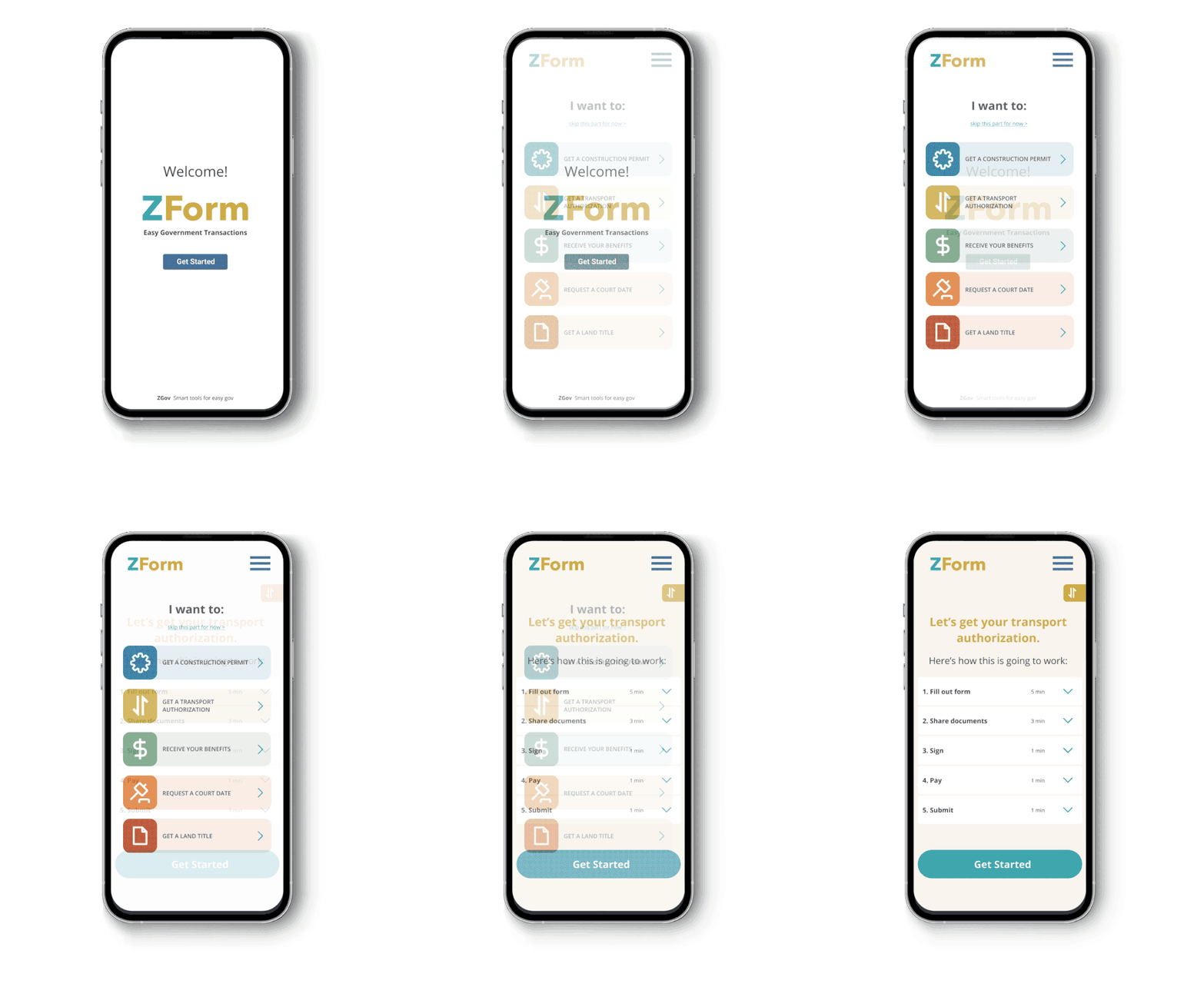
ZForm is a civic transaction platform built under contract for the United States government, enabling citizens and businesses to complete government processes digitally from any device. I have contributed as a frontend consultant since January 2023 — an engagement now in its third year.
[US Government Client] · [React.js] · [Frontend Consulting · Jan 2023 – Present]
Overview
ZForm is a digital services platform contracted by the United States government and delivered through Just Results. It replaces paper-based and in-person government transactions with a digital process accessible from any device — phone, tablet, or desktop. Citizens and businesses across the country use it to complete government processes that previously required a physical visit or a paper form.
The platform has been in active development since early 2023. I have been a contributing frontend consultant for the full duration of that engagement.
The Challenge
A government transaction platform carries a different weight than commercial software. The people using ZForm are not choosing between it and a competitor — for many, it is the only available path through a required process. That means UI ambiguity, broken states, and inaccessible interactions are not inconveniences. They are barriers.
The engineering challenge was building something reliable enough to substitute for a physical process, accessible enough to serve the full range of how Americans interact with technology, and maintainable enough to keep improving across a multi-year engagement without accumulating the kind of technical debt that makes government software notorious.
My Role
I joined ZForm as a contracted frontend consultant in January 2023, embedded in a cross-functional team of developers, product owners, and government-side stakeholders. My responsibility was core frontend feature development in React.js — building and optimizing the application features citizens and businesses interact with directly.
Working on a government contract means delivery standards are explicit and accountability is continuous. Requirements are defined before development begins. Features are measured against documented end-user needs. That process shapes how the work gets done: coordination with the engineering team on approach, component design, and interaction behavior is not optional — it is how the product stays consistent across contributors and releases.
I have been part of that process for over two years. In government contracting, a sustained engagement reflects consistent delivery against the client's standards — not a one-time handoff, but an ongoing responsibility.
What I Built
Core Application Features
I developed and optimized the core features of the ZForm application — the transaction flows, form interactions, and process states that citizens and businesses move through to complete a government process. In this context, "correct" is a higher bar than in most commercial software. A form that loses state mid-completion, a step that does not communicate what happens next, or an interaction that fails on a non-standard device does not just create friction — it blocks someone from completing a process they are required to complete.
My focus was on predictable behavior: states that reflected reality, transitions that communicated clearly, and error handling that gave users a real path forward rather than a dead end.
Cross-Functional Delivery
Government projects do not move the way startups do. Decisions about approach and implementation were coordinated with the broader engineering team before code was written — which reduced rework, kept the codebase consistent across contributors, and ensured the product met the accountability standards the contract required.
That coordination was continuous across the engagement. Features were scoped, built, reviewed, and shipped in a process designed for long-term maintainability, not sprint-to-sprint velocity.
Results
ZForm delivered a digital path through government transactions that previously required in-person visits or paper processes, extending access to citizens and businesses across the United States on any device.
The engagement has been sustained since January 2023 — now over two years. In a government contracting context, that continuity reflects consistent delivery against a high-accountability standard. The client has not replaced the team or the approach. The product is still in active development.
Closing
Two years on the same government contract. The accountability is different when the end user is a citizen completing a process they cannot opt out of — and that standard carries into every other product environment I work in.